Dahlia Diary
Night Silence Dahlia: Color, Size, Care & Cut-Flower Guide
Night Silence is a richly colored decorative dahlia with smoky lilac-pink petals, burgundy reverses and dark foliage. Here is what growers should know about its history, size, care and performance as a cut flower.
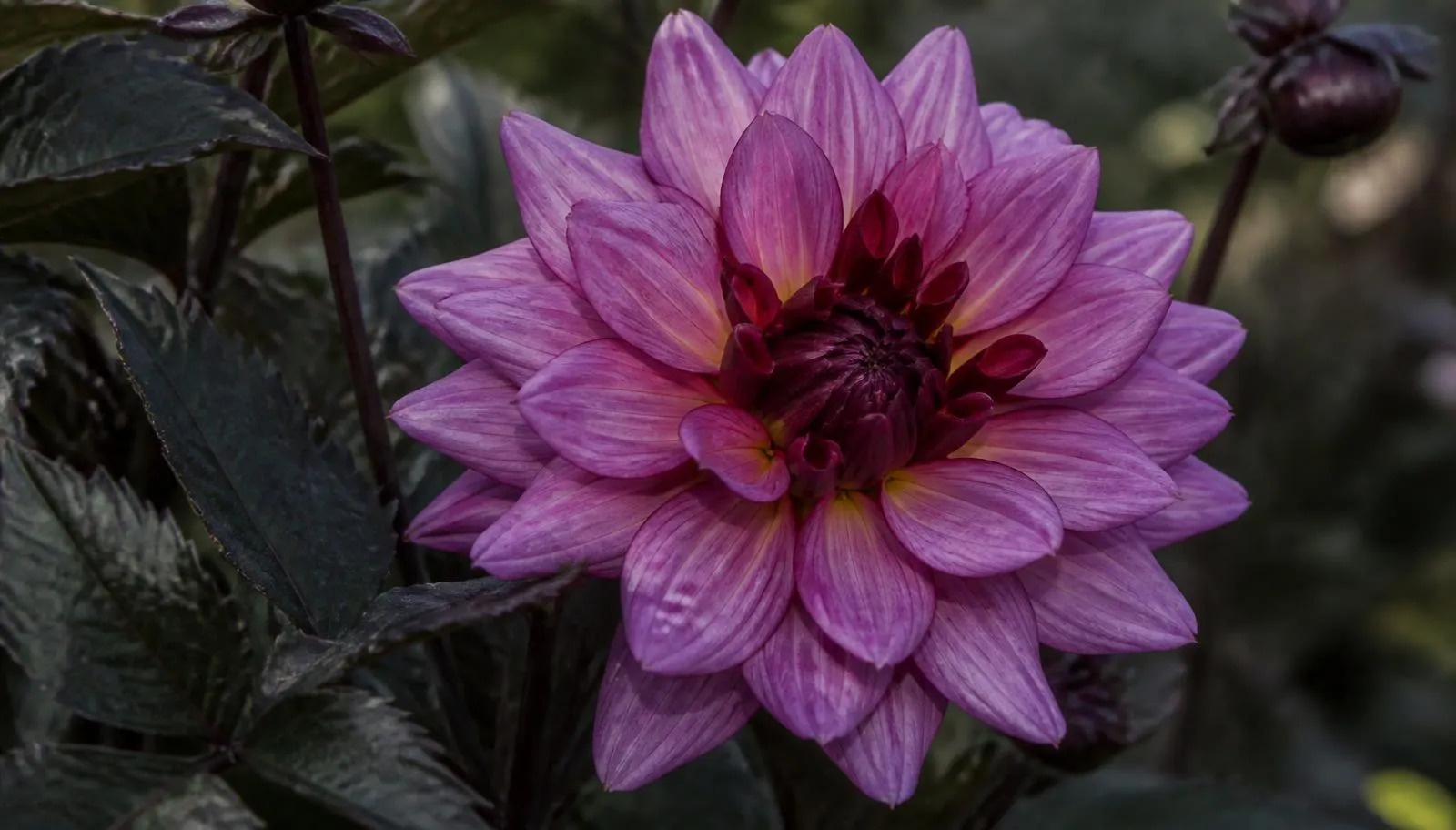
Some dahlias command attention with enormous blooms or brilliant color. Night Silence dahlia is different. Its beauty is quieter, moodier and more complex — a shifting combination of antique pink, muted lilac, wine red and soft yellow set against dark, bronze-tinted foliage.
Although photographs often make Night Silence look burgundy, mauve or even brown, the flower cannot be described accurately with a single color. Its unusual layering of tones is exactly what has made it desirable among gardeners, flower farmers and floral designers.
Night Silence is officially recognized as a decorative dahlia with double lilac-pink flowers, burgundy-red coloring beneath and toward the center of the petals, and a subtle trace of yellow. The Royal Horticultural Society recommends it for garden borders, containers and cut-flower use.
Night Silence dahlia at a glance
| Characteristic | Verified information |
|---|---|
| Cultivar name | Dahlia 'Night Silence' |
| Official form | RHS Group 5 Decorative |
| Hybridizer | Ru-Ro Plant |
| Named, introduced & registered by | M.J.M. Komen-Kruiswijk |
| Registration year | 2019 |
| Original seedling number | RuRo 166 |
| Registered bloom size | Up to 100 mm (about 4 inches) |
| Registered stem height | About 0.8 m (31 inches) |
| Typical listed height | 80–100 cm (31–39 inches) |
| Flower color | Lilac pink, deep pink, burgundy red and pale yellow |
| Foliage | Green to dark green with bronze or purple coloring |
| Flowering season | Midsummer through autumn, until frost |
| Best position | Full sun |
| Best soil | Fertile, moist but well-drained |
| Uses | Cutting garden, border, large container, floral design |
The cultivar's official registration documents record flowers measuring up to 100 mm wide, purple stems approximately 0.8 meter tall, and greenish foliage marked with purple.
What color is Night Silence dahlia?
Night Silence is usually marketed as a smoky pink, dusty mauve, old rose, wine, plum or burgundy dahlia. All of these descriptions capture part of the flower, but none tells the entire story.
The International Dahlia Register gives a much more exact description. Its upper petals have a pale greenish-yellow foundation that is heavily overlaid with deep-pink striping and narrowly edged in deep red. The reverse of the petals is deep red with purplish pink near the base. Its stems are purple, while the foliage combines green and purple tones.
The current RHS plant description simplifies those technical color-chart measurements into double lilac-pink flowers with burgundy red beneath and through the center of the petals, together with a hint of yellow. It also describes the leaves as bronzy dark green.
This layered pigmentation explains why Night Silence can look so different from one photograph to another. Under bright daylight, the pink and lilac tones may be most noticeable. In softer evening light, the burgundy undersides and dark center become more prominent. As flowers mature, growers may also notice subtle differences in intensity.
That variability is part of its appeal. Night Silence does not produce a flat block of color. Each flower appears shaded, brushed and layered.
Is Night Silence a black dahlia?
Night Silence is sometimes grouped with dark or "black" dahlias, but its flowers are not truly black. The darkest areas are generally found on the petal reverses, margins, center, stems and foliage. The face of the flower is more accurately described as smoky pink, lilac pink or antique rose over burgundy.
Gardeners searching for a genuinely near-black flower may prefer varieties such as 'Black Jack' or 'Karma Choc'. Night Silence is better suited to growers looking for a romantic, vintage or painterly color palette rather than a uniformly dark bloom. If you are building a moody palette, our roundup of new dahlia varieties for 2026 includes several dark-toned introductions worth pairing with it.
The history of Night Silence dahlia
Night Silence is a comparatively recent cultivar. The authoritative International Dahlia Register credits Ru-Ro Plant as both its hybridizer and grower. M.J.M. Komen-Kruiswijk named, introduced and registered the variety in 2019. During its development, it was identified as seedling RuRo 166.
The Royal Horticultural Society serves as the International Cultivar Registration Authority for dahlias, maintaining the official register and its supplements.
Some secondary sources associate Ru-Ro breeding with Dutch breeder Jan van Ruiten. However, the safest publishable attribution is the one used in the official register: hybridized by Ru-Ro Plant and introduced by M.J.M. Komen-Kruiswijk in 2019.
Night Silence was also included in the RHS Dahlia Trial conducted at Wisley during 2023 and 2024. The trial evaluated cultivars for flowering performance, bloom quality, foliage, stem strength and resilience. Night Silence was among the cultivars assessed, although it was not listed among the varieties that received a new Award of Garden Merit.
If you are curious how new cultivars like this one come to exist, our guide to dahlia genetics, seeds and propagation explains why every dahlia seedling is genetically unique.
What type of dahlia is Night Silence?
The official RHS classification places Night Silence in Group 5: Decorative Dahlias. Decorative dahlias produce fully double flower heads with broad petals that are flat or slightly incurved.
You may see Night Silence advertised by North American sellers as either a formal decorative or a small informal decorative. Those descriptions are inconsistent from one supplier to another. Unless a seller is using a documented American Dahlia Society classification, it is more accurate to describe Night Silence simply as a decorative dahlia. Its petals can appear orderly near the center while becoming softer, looser or slightly ruffled toward the outside.
How large are Night Silence dahlia flowers?
The registered flower size is up to 100 mm, which is just under four inches across. Some commercial listings describe blooms of 4 to nearly 5 inches. Growing conditions, plant maturity, disbudding and measurement methods can all contribute to variation, but the official figure is approximately four inches.
That moderate size is an advantage for floral design. Night Silence is substantial enough to become a focal flower without overwhelming smaller supporting blooms. Its flowers fit comfortably into hand-tied bouquets, compote arrangements and garden-style centerpieces.
How tall does Night Silence grow?
The original registration records stems of approximately 0.8 meter, or about 31 inches. The broader RHS plant profile gives a mature height and spread of approximately 0.5 to 1 meter. Most gardeners can expect Night Silence to finish between roughly 32 and 39 inches tall. Soil fertility, temperature, sunlight, moisture and pinching can affect its final height.
This relatively manageable habit makes it more versatile than many tall cutting dahlias. It can be grown:
- In the middle or front half of a dahlia border
- In a dedicated cutting garden
- Among dark-leaved annuals and perennials
- In a generously sized container
- Near paths where its foliage can be appreciated before flowering
Although the plant is not exceptionally tall, support is still helpful. Summer storms, heavy rain and the weight of multiple flowers can bend unprotected branches.
Dark foliage adds interest before flowering
Night Silence is notable not only for its flowers but also for its foliage. The registered description records greenish foliage with purple coloring, while the RHS describes bronzy dark-green serrated leaves. Purple stems further deepen the contrast. This means the plant contributes visual interest long before its first flower opens. It pairs especially well with plants carrying silver, cream, pale apricot, blush or burgundy coloring.
In a mixed border, consider combining Night Silence with:
- Pale blush or cream dahlias
- Burgundy amaranth
- Chocolate cosmos
- Dusty rose zinnias
- Apricot snapdragons
- Dark-leaved basil
- Cream or blush celosia
- Seeded grasses and autumn foliage
For bouquets, its complex coloring works well with antique pink, muted peach, caramel, wine, cream and soft plum.
When does Night Silence bloom?
The RHS lists the flowering period for Night Silence as July through November under UK growing conditions. It is described as a long-flowering cultivar suited to borders, pots and cutting.
The exact season will depend on climate and planting time. In colder northern gardens, flowering normally begins in midsummer or late summer and continues until the first killing frost. For zone-by-zone timing, see when to plant dahlia tubers.
Regular cutting and deadheading encourage the plant to continue producing new buds. The RHS specifically recommends removing spent blooms to prolong flowering.
Is Night Silence good as a cut flower?
Night Silence is widely marketed as a cut-flower variety, and the RHS includes cut flowers among its recommended uses. Sarah Raven's growing trial also described it as having very good vase life and being especially useful for cutting and containers.
However, there is no authoritative variety trial that assigns Night Silence a standardized number of vase-life days. Grower experience can vary according to harvest stage, weather, hydration and post-harvest care.
The American Dahlia Society considers approximately five days in the customer's vase a desirable result for a cut dahlia. It recommends cutting blooms when roughly three-quarters open, harvesting during the cool part of the day, removing foliage and keeping arrangements away from heat and direct sunlight. Our post-harvest and vase life guide covers hydration and holding solutions in more detail.
How to harvest Night Silence for the vase
Cut flowers early in the morning or later in the evening when the plants are well hydrated. Choose blooms that are nearly open, with firm outer petals and no browning or insect damage. Use clean shears and cut a long stem above a branching point. Immediately place the stem into a clean bucket of cool water.
Before arranging:
- Remove all leaves that would sit below the waterline.
- Recut the stem with clean pruners.
- Place it in a clean vase with fresh water and floral preservative.
- Keep the bouquet away from direct sun, heating vents and ripening fruit.
- Refresh the water frequently.
Growing for weekly bouquets? Pair Night Silence with a cut flower succession planting plan so supporting blooms are ready at the same time.
How to grow Night Silence dahlia
Night Silence requires essentially the same care as other decorative dahlias.
Sunlight
Plant it in full sun. The RHS recommends a sunny, sheltered position, while the American Dahlia Society recommends a site with good drainage and partial to full sun. Strong flowering will generally require at least several hours of direct light each day.
Soil
Choose fertile soil that holds moisture without remaining waterlogged. Incorporating compost or other organic matter can improve both fertility and soil structure. Night Silence can grow in clay, loam or sandy soil provided drainage is adequate. Wet soil is particularly dangerous when the tuber is dormant or just beginning to grow.
Planting time
Plant outdoors after the soil has warmed and the danger of frost has largely passed. The American Dahlia Society suggests using tomato-planting time as a practical guide. Tubers may also be started indoors approximately a month early for an earlier beginning to the season.
Place the tuber horizontally with its eye or new shoot facing upward — see how to identify an eye on a dahlia tuber if you are unsure which end is which. Avoid heavy watering before growth appears, especially in cool soil.
Spacing
Allow approximately two feet between dahlia plants. This provides space for branching and helps air circulate through the foliage. Night Silence may remain somewhat more compact than taller varieties, but close spacing can still encourage fungal problems and make cutting more difficult.
Pinching
Once the plant has developed several sets of leaves and is growing actively, remove the central growing tip. Pinching encourages the plant to branch and produce more flowering stems. The RHS recommends pinching the growing tips to encourage a bushier plant.
Watering
Avoid keeping a newly planted tuber constantly wet. Once the plant is established and growing strongly, water deeply during dry weather. The American Dahlia Society recommends watering established plants when weekly rainfall is insufficient, while noting that container-grown dahlias require more frequent attention.
Water the soil rather than repeatedly soaking the foliage. Consistent moisture supports stem growth and flowering, but saturated soil increases the risk of tuber and crown rot.
Feeding
Begin with soil improved by compost and use a balanced fertilizer according to soil conditions. Excessive nitrogen can produce lush foliage at the expense of flowering. A soil test is the most dependable way to determine what your garden needs. Regular but moderate feeding during active growth can support continued bloom production.
Support
Install a stake when planting or while the plant is still small. Adding a stake later can damage the tuber clump. Tie the main stems loosely as they grow, or use a low plant support or tomato cage. Even a 3-foot dahlia can become top-heavy once it carries several rain-soaked flowers.
Growing Night Silence in a container
Night Silence is one of the more practical decorative dahlias for a container because it generally stays around 80 to 100 cm tall. Both the RHS and Sarah Raven recommend it for pot culture.
Use a large, stable container with unobstructed drainage holes. A small decorative pot will dry too quickly and may tip once the plant becomes top-heavy. Container-grown dahlias require more frequent watering and feeding than plants grown in the ground. They should still receive support and should not be left sitting in a water-filled saucer.
Pests and diseases to watch for
Young dahlia shoots are especially vulnerable to slugs. Aphids, spider mites, earwigs, caterpillars and other chewing insects may also damage foliage or flowers.
Potential disease problems include powdery mildew during dry conditions, gray mold and fungal rot during wet weather, storage rot and several viruses that can produce stunting, mottling or distorted growth.
Good spacing, clean tools and careful watering help reduce disease pressure. Do not save or distribute tubers from a plant displaying suspicious viral symptoms. Common garden pests and how to manage them covers the insect side of that equation.
How to overwinter Night Silence in cold climates
Night Silence is a tender perennial rather than a winter-hardy perennial in northern regions. Across the colder parts of the northern United States, gardeners should dig and store dahlia tubers after the first killing frost.
After frost blackens the foliage:
- Label the plant before cutting it down.
- Cut back the stems.
- Carefully loosen the entire clump from several inches away.
- Lift without pulling on the stem.
- Allow the clump to dry in a protected place.
- Store it frost-free where it will remain cool but will not freeze.
Check stored tubers periodically and remove any tissue that becomes soft or rotten. Our full guide to digging and storing dahlia tubers walks through washing, dividing and packing methods step by step.
Is Night Silence dahlia worth growing?
Night Silence is an excellent choice for gardeners who value sophisticated color, useful flower size and ornamental foliage. Its strongest qualities are:
- Unusual, multidimensional coloring
- Dark stems and bronze-purple foliage
- Manageable height
- Approximately 4-inch decorative flowers
- Suitability for borders and containers
- Strong potential as a cut flower
- Compatibility with romantic and autumnal color palettes
It may be less suitable for someone seeking enormous dinner-plate blooms, a uniformly black dahlia or a proven high-volume commercial producer. Reliable variety-specific data on tuber production and exact vase-life duration remain limited.
For the home gardener or floral designer, however, Night Silence offers something difficult to find in brighter varieties: a flower that changes with the light and becomes more interesting the closer it is viewed.
Frequently asked questions about Night Silence dahlia
How tall is Night Silence dahlia?
The official registration records stems of approximately 0.8 meter, or 31 inches. Most commercial and RHS descriptions place the mature plant between about 80 and 100 cm tall.
How large are Night Silence flowers?
The registered maximum is 100 mm, approximately four inches across. Some seller descriptions report slightly larger flowers, but four inches is the most authoritative figure.
Is Night Silence a formal or informal decorative dahlia?
The RHS International Dahlia Register classifies it as Group 5 Decorative. More specific formal and informal labels vary among sellers and are not consistent.
What color is Night Silence dahlia?
Its flowers combine lilac pink, deep pink, burgundy red and a small amount of pale yellow. Dark petal reverses and purple stems give it a moodier appearance than a standard pink dahlia.
Is Night Silence good for bouquets?
Yes. The RHS recommends it for cutting, and grower descriptions praise its vase performance. For the longest display, harvest hydrated flowers at approximately three-quarters to fully open and place them immediately in clean water.
Can Night Silence grow in a pot?
Yes. Its manageable height makes it suitable for a large container with full sun, good drainage, consistent moisture and support.
Does Night Silence survive winter in northern gardens?
Its top growth and tubers are not reliably winter hardy in the northern United States. Dig the clump after a killing frost and store it in a frost-free location for replanting the following spring.
Track your own Night Silence records
Growing Night Silence this season? Add it to your Dahlia Diary in BotaNotes to record planting dates, growth, first bloom, stem quality, vase life and tuber production. Over time, your own garden records become the most useful growing guide for your climate.