Dahlia Diary
When to Plant Dahlia Tubers: Soil Temperature & Frost Guide
Plant dahlia tubers outdoors after the danger of frost has mostly passed and the soil at planting depth has warmed to about 60°F (16°C) or higher for several consecutive days. Avoid planting into cold, muddy, or waterlogged soil — even when the calendar says it should be planting time. Your USDA hardiness zone is a useful regional estimate, but it should not set your exact planting date.
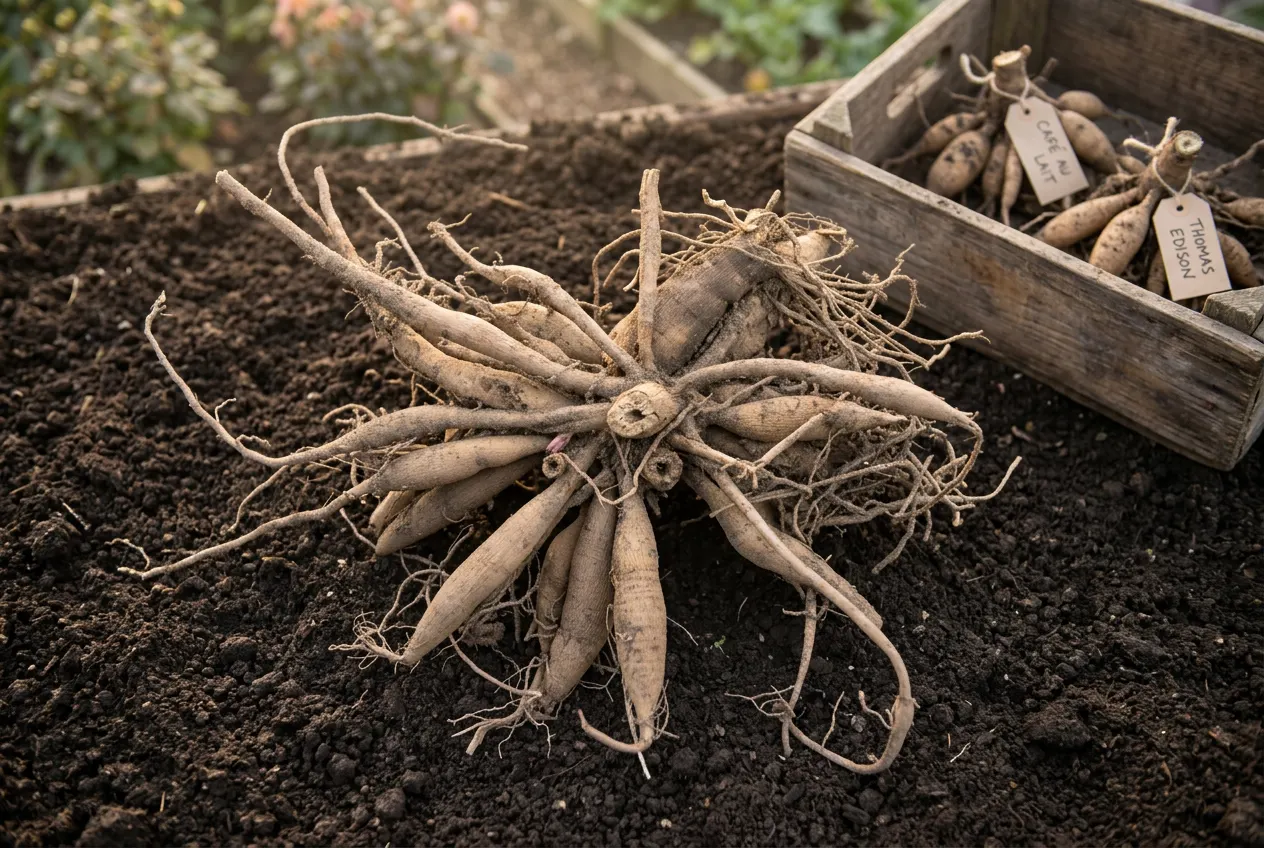
When should you plant dahlia tubers?
Dahlias are tender tubers, not seeds. They rot in cold, wet soil and wake up slowly until the ground warms. The most reliable planting signal is a combination of frost risk and soil temperature — not a calendar date and not a hardiness zone.
Plant when all of these are true:
- The danger of frost has largely passed for your area.
- Soil at planting depth is approximately 60°F (16°C) or warmer, and has held near that temperature for several consecutive days.
- The soil is workable — not cold, muddy, or waterlogged.
- The upcoming forecast shows no hard freeze in the next 10–14 days.
A basic soil thermometer (under $15) settles the question in a minute. Push it 4 inches into the bed mid-morning, wait five minutes, and read. If it's under 60°F, wait a week and check again. This single habit prevents most tuber rot.
Ready to plant? Quick checklist
- Local frost danger has passed
- Soil at planting depth is ~60°F (16°C) or warmer
- No hard freeze in the upcoming forecast
- Soil drains well and is not saturated
- The tuber has viable crown tissue and at least one visible eye
- Stakes or supports are installed before planting
Why USDA zones aren't a planting calendar
USDA hardiness zones describe the average extreme winter minimum temperature for an area. They do not describe spring last-frost dates, spring soil temperatures, elevation, aspect, or microclimates. Two gardens in the same zone — one in a low, shaded, clay-bottom yard and one on a sunny south-facing slope — can be ready to plant two or three weeks apart.
Use your zone as a rough regional estimate of when to start watching. Then confirm with your local average last frost date, the upcoming forecast, and a soil-temperature reading before you put tubers in the ground.
Approximate regional planting windows by zone
Approximate regional windows only — always confirm with your local frost forecast and actual soil temperature before planting. A cool, wet April can push these dates 1–2 weeks later.
| USDA zone | Avg. last frost | Typical planting window | Pre-sprout indoors | Typical first blooms |
|---|---|---|---|---|
| 3 | Jun 1–15 | Jun 1–15 | Apr 20 – May 5 | Late Aug |
| 4 | May 15–30 | May 20 – Jun 5 | Apr 10 – 25 | Mid Aug |
| 5 | May 1–15 | May 10 – 25 | Apr 1 – 15 | Early Aug |
| 6 | Apr 15–30 | Late Apr – mid May | Mar 20 – Apr 5 | Late Jul |
| 7 | Apr 1–15 | Mid Apr – early May | Mar 10 – 25 | Mid Jul |
| 8 | Mar 15–30 | Apr | Mar 1 – 15 | Early Jul |
| 9 | Feb 15–28 | Mar – early Apr | Feb 15 – Mar 1 | Late Jun |
| 10 | Rare | Feb – mid Mar | Optional | Jun |
Not sure of your zone? Use the USDA zone lookup or enter your ZIP code in the planting calendar. Remember: the zone gives you a starting window, not a specific planting date.
Understand the "last frost date"
An average last frost date is a historical average — not a guaranteed cutoff. A late freeze can occur after the historical average date, and mild springs can bring the ground into planting shape a week or two early. Always check the upcoming 10–14 day forecast before planting, and be ready to cover emerged shoots with frost cloth if a surprise freeze threatens.
Pre-sprouting: 4–6 weeks of extra bloom time
Pre-sprouting (also called "waking up" tubers) is the single biggest lever gardeners in short-season zones have for earlier blooms. Start tubers indoors about 4–6 weeks before your outdoor planting window — the American Dahlia Society suggests roughly one month early when you want earlier flowers. Starting much earlier than that leads to lanky, root-bound plants by the time weather cooperates.
- 4–6 weeks before outdoor planting: pot tubers up into clean potting mix. A roughly 1-gallon container per tuber gives roots room without staying soggy.
- Lay the tuber horizontally, crown and visible eye facing up, with about ½ inch of mix over the crown and the tuber body barely covered.
- Keep at 60–70°F in bright indirect light. Water lightly — tubers hold their own moisture, and wet mix rots them faster than anything.
- When shoots emerge, move to strong light and water only when the top inch of mix is dry.
- Harden off for 7–10 days before transplanting, exposing plants to progressively longer outdoor time before setting them into the garden.
No eyes visible on your tubers? Check the crown carefully — see How to identify an eye on a dahlia tuber for close-up photos before you write a tuber off.
Find the eye before you plant
A dahlia eye is a small growing point on the crown or shoulder of the tuber — the area where the tuber joined the previous year's stem. Eyes do not form on the narrow, pointed outer end of the tuber. A detached tuber with no crown tissue and no eye generally will not grow, no matter how plump it looks.
When you plant, orient the tuber roughly horizontal with the crown and visible eye facing upward. That's the direction the shoot needs to travel.
How to plant a dahlia tuber (step by step)
- Choose the site. Full sun (6+ hours), well-drained soil, near-neutral pH (about 6.5–7.0). Work in a few inches of compost. Skip high-nitrogen fertilizer — it grows leaves, not flowers.
- Dig a hole or shallow trench about 4–6 inches deep. Space tubers 18 inches apart for cut-flower rows, or 24–36 inches apart in landscape plantings. Oregon State's trench method fills the trench in gradually as the shoot grows — a good option in heavy soil.
- Lay the tuber horizontally with the crown and visible eye pointing up.
- Install a stake now, not later. Driving a stake next to a mature plant spears the tuber. A 5-foot bamboo or metal T-post at planting time saves the plant in July.
- Cover with several inches of loose soil. Don't compact it heavily.
- Go easy on water until shoots appear. See below.
Watering — less is more, at first
This is the most-broken rule in dahlia growing. Young or dormant tubers use very little water, and the American Dahlia Society specifically warns that excess moisture before active growth can cause tubers to rot. A "water it in thoroughly" reflex from other transplants is a mistake here.
A safer approach:
- Plant into workable, well-drained soil that already has adequate spring moisture.
- Avoid keeping the planting area saturated before shoots emerge.
- Once green shoots break the surface (typically 2–4 weeks), begin deeper, more regular watering, adjusting for rainfall and soil type.
- In full summer, established dahlias want a deep soak 2–3 times a week rather than daily shallow watering.
Planted a little late? You still have time.
Gardeners have real flexibility on the back end of the season. The American Dahlia Society notes that dahlias can be planted as late as mid-June in much of the United States. Later planting simply means later flowers — not a failed crop. If you missed your ideal window, plant anyway, choose earlier-blooming varieties (poms, singles, and mignons open faster than dinnerplates), and skip pinching to speed the first flush.
Regional exceptions worth knowing
- Pacific Northwest (zones 7–8, wet springs): soil stays cold and saturated well past the frost date. Pre-sprout in pots and transplant when soil reads 60°F — often mid to late May.
- Deep South (zones 8b–10): plant February–March for early-summer blooms, then consider a second crop in late summer for a fall flush that beats the mid-summer heat lull.
- High-elevation Mountain West (zones 4–6): even with early-June planting, black plastic mulch can warm soil 5–8°F and buy back 1–2 weeks of bloom time.
- Low desert (zone 10): dahlias are essentially a cool-season crop here. Plant in October–November for winter and spring blooms; summers are too hot for good flowers.
How long from planting to bloom?
Expect roughly 8–12 weeks from planting to first bloom, depending on variety and heat units. Small-flowered varieties (poms, singles, mignons) bloom in 8–9 weeks. Dinnerplates and giant informal decoratives take 11–13 weeks. Once they start, healthy plants bloom continuously until first frost.
Plan your dahlia season without a spreadsheet
Between soil temperatures, pre-sprout dates, planting dates, staking reminders, and expected bloom windows, tracking a 20-variety dahlia collection on paper falls apart by June. The BotaNotes Dahlia Diary reads your USDA zone and generates zone-specific planting and pre-sprout estimates for every variety in your inventory — still meant to be confirmed against your local forecast and soil temperature. Log a tuber once and the app reminds you when to wake it up, when to plant it out, and when to expect blooms. Try the read-only demo before starting a free trial.
Frequently asked questions
Can I plant dahlia tubers before the last frost?
Only cautiously. If soil is dry, well-drained, and warming, planting deep (4–6 inches) and withholding water can work — dormant tubers below the surface tolerate a light late frost above. But cold, wet soil is the real killer. If your soil is below about 55–60°F or the forecast shows a hard freeze, wait or pre-sprout indoors.
How deep should I plant dahlia tubers?
A hole or shallow trench about 4–6 inches deep, covered with several inches of loose soil, works for most gardens. In hot climates plant a bit deeper for insulation; in cold, wet-spring zones plant on the shallow end so the tuber warms faster.
Do I need to soak dahlia tubers before planting?
No. Dry tubers with visible eyes go straight into the ground. A brief soak (1 hour in room-temperature water) is only useful for shriveled tubers that spent winter in very dry storage — it can rehydrate borderline tubers.
What if my tubers already sprouted in storage?
Plant them anyway, but protect the sprouts. If sprouts are under 2 inches, plant normally and cover with a thin layer of soil. If sprouts are longer or leafy, pot the tuber up and grow indoors until the outdoor window opens.
How many tubers per hole?
One tuber per hole. Two tubers close together produce weaker plants that compete for water and nutrients. For a fuller look, space tubers 12–15 inches apart and pinch each plant at the 4th leaf pair for bushier growth.
Can I plant dahlia tubers in pots or containers?
Yes — use pots at least 14 inches wide and 12 inches deep with drainage holes. Container-grown dahlias dry out faster and often need daily watering in summer, but they bloom 1–2 weeks earlier than in-ground plants because potting mix warms faster in spring.
Next in the dahlia series
- How to identify an eye on a dahlia tuber
- How to store dahlia tubers for winter
- Dahlia genetics, seeds & propagation
Sources and further reading
- American Dahlia Society — Growing Dahlias (planting timing, watering cautions, late-planting flexibility).
- Oregon State University Extension — Growing Dahlias in Your Home Garden (soil temperature target, trench planting depth, indoor start).
- USDA — Plant Hardiness Zone Map (what hardiness zones do and do not describe).