Dahlia Diary
Café au Lait Dahlia: Complete Growing & Cut-Flower Guide
Café au Lait is the most requested dinnerplate dahlia in floral design — enormous, softly ruffled and endlessly color-shifting. Here is what growers can realistically expect from it in the garden and in the vase.
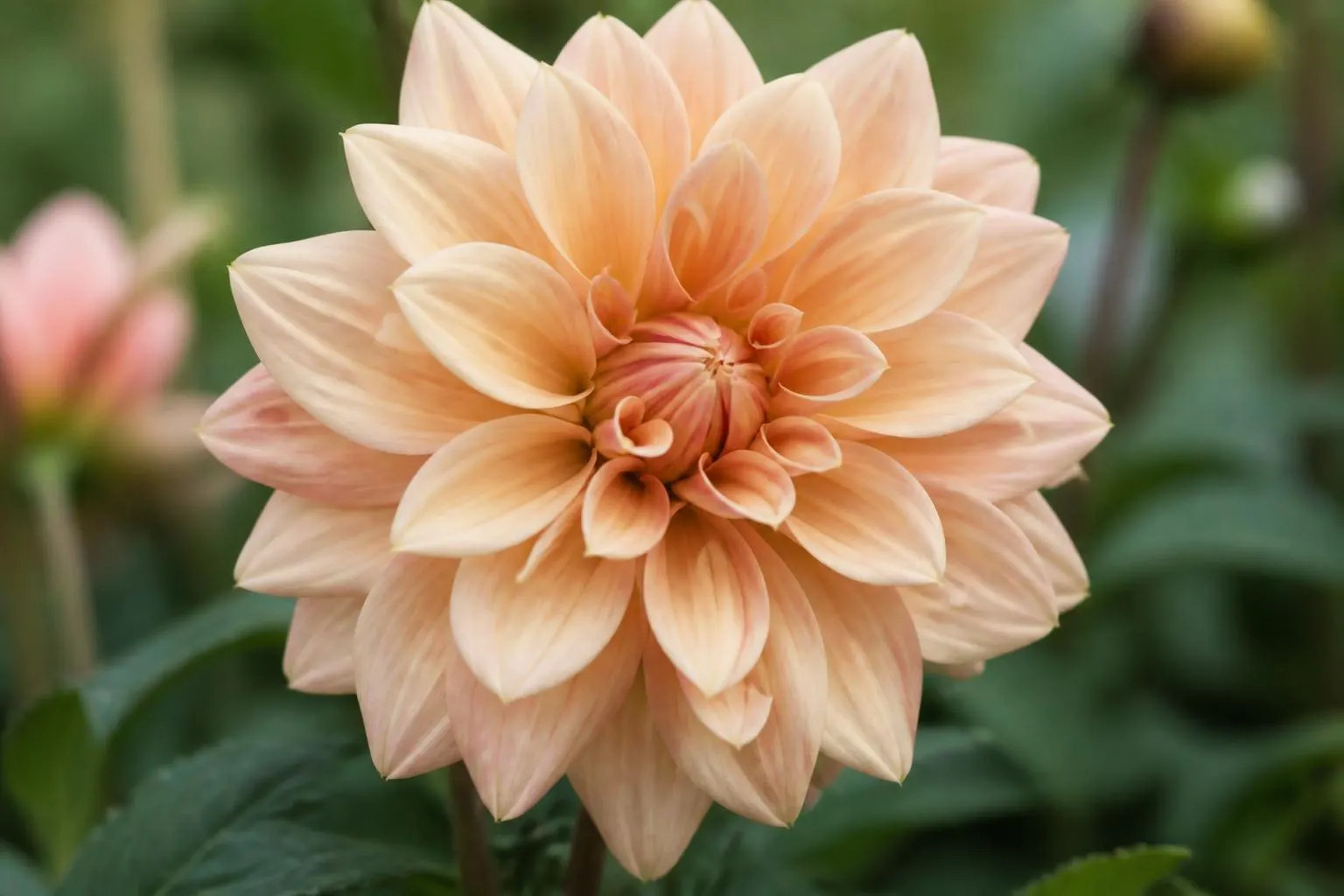
Few dahlias have achieved the recognition of Café au Lait.
Its enormous, softly ruffled flowers can appear creamy beige one week, blush pink another, and sometimes carry hints of rose, champagne or pale peach. The blooms can reach approximately 8 to 10 inches across, giving them the scale of a dinner plate while retaining an unusually soft, romantic appearance.
That combination has made Café au Lait especially desirable for wedding flowers, floral design and cutting gardens.
Floret Flowers has called Café au Lait its number-one most requested dahlia variety and describes the enormous informal decorative flowers as resembling pastel silk pillows. In later breeding work, Floret described Café au Lait as perhaps its most memorable dahlia and noted its particularly large and devoted following.
Yet Café au Lait can also be confusing for new growers. Its color changes. Photographs of it can look surprisingly different. Its giant flowers need support. And despite being an iconic cut flower, a huge dinnerplate dahlia does not necessarily behave in the vase like a smaller ball dahlia.
Here is what we can reliably establish about Dahlia 'Café au Lait', along with what growers should realistically expect.
Café au Lait dahlia at a glance
| Characteristic | Café au Lait |
|---|---|
| Cultivar | Dahlia 'Café au Lait' |
| Common category | Dinnerplate dahlia |
| Flower form | Decorative; commonly described in the trade as informal decorative |
| Typical bloom diameter | Approximately 8–10 inches |
| Typical plant height | Approximately 36–48 inches |
| Typical spread | Approximately 18–24 inches |
| Primary colors | Cream, beige, blush pink, pale rose and champagne |
| Color stability | Variable |
| Bloom season | Midsummer through frost |
| Light | Full sun |
| Primary uses | Cutting garden, wedding flowers, floral design, ornamental garden |
| Vase use | Excellent statement flower; vase life typically shorter than some smaller dahlia forms |
| Pollinator value | Limited because of its densely double flower form |
| Winter behavior | Tender perennial; winter survival depends heavily on climate and soil conditions |
Longfield Gardens, which trials dahlias for the home-garden market, lists Café au Lait at approximately 36–48 inches tall with 8–10-inch flowers. Its plants generally spread approximately 18–24 inches.
What does a Café au Lait dahlia look like?
Café au Lait is difficult to describe with a single color — and that is one of its defining characteristics.
A typical flower begins with a warm creamy or beige foundation. Depending on the bloom and growing conditions, petals may develop blush-pink, pale rose, champagne or soft peach tones. Some flowers look almost ivory. Others can be surprisingly pink. And flowers produced by the same plant can differ noticeably from one another.
Longfield Gardens specifically notes that Café au Lait's color varies with weather conditions and time of year, with flowers ranging from creamy yellow and bone through blush pink and rose.
That variability is important for gardeners purchasing the cultivar after seeing a particular photograph online. You should not expect every Café au Lait bloom to exactly match a photograph. Its changing coloration is part of the cultivar's character.
Why is Café au Lait so popular?
Café au Lait occupies an unusual position in the dahlia world. It is simultaneously a garden flower, a collector's cultivar and an important floral-design flower.
Floret Flowers has grown and trialed hundreds of dahlia varieties and identified Café au Lait as its most requested cultivar for floral design work, noting its popularity among brides and wedding designers. There are several reasons.
1. The flowers are enormous
An 8-to-10-inch Café au Lait flower can function almost like a peony in an arrangement. Rather than needing five or six smaller flowers to create visual mass, one Café au Lait can become the focal point of an entire bouquet.
2. Its color behaves almost like a neutral
Cream, blush, beige, champagne and dusty rose work with an enormous range of floral palettes. Café au Lait can complement white, ivory, blush, peach, apricot, dusty rose, burgundy, mauve, caramel, terracotta, chocolate and sage green. That versatility helps explain its popularity for weddings.
3. Every flower is slightly different
The changing coloration gives arrangements a natural, painterly quality. A bouquet containing several Café au Lait blooms can appear to contain multiple closely related cultivars.
4. The flower photographs beautifully
The intricate layers of broad petals create highlights and shadows that give the flower extraordinary depth in photographs. For wedding photographers, florists and social-media content, this is a significant advantage.
The history of Café au Lait dahlia
Café au Lait is generally reported in horticultural references as a Dutch cultivar dating to 1968, associated with the breeder Bruidegom.
The Royal Horticultural Society is the International Cultivar Registration Authority for dahlias and maintains the International Register of Dahlia Names and its subsequent supplements.
Because cultivar histories are frequently copied between nursery catalogs without primary documentation, historical breeder and introduction claims should be treated more cautiously than characteristics that can be verified through current trialing and authoritative cultivar records.
What is clear is that Café au Lait is not a recent social-media creation. Its modern popularity represents the rediscovery and extraordinary expansion of an older cultivar — particularly as the garden-to-vase and wedding-flower movements grew. Today, it is one of the most recognizable dahlias grown for floral design.
What type of dahlia is Café au Lait?
Café au Lait is widely described as a decorative dinnerplate dahlia, and it is commonly described in the cut-flower trade as an informal decorative. "Dinnerplate" is primarily a descriptive horticultural term referring to exceptionally large flowers rather than a botanical species — see our guide to dinnerplate dahlias for the other giants worth growing, and the dahlia form, size and color guide for how the classification system works.
Café au Lait's broad petals overlap in multiple layers, but they do not create the rigid geometric sphere associated with ball dahlias. Instead, petals curve, twist and sometimes fold differently from one flower to another. That irregularity creates the loose, luxurious appearance for which Café au Lait is known.
How big are Café au Lait dahlias?
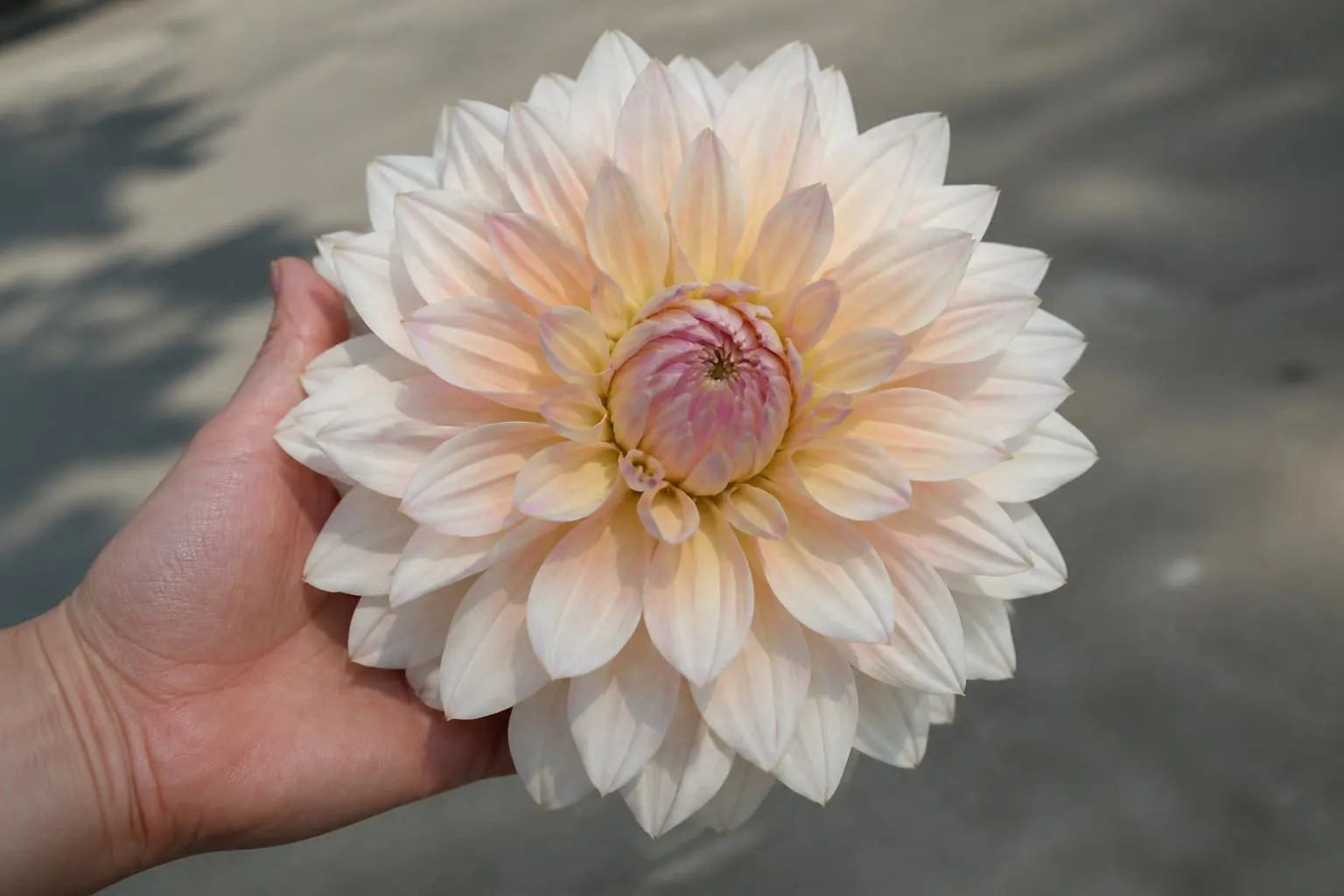
This is a genuinely large-flowered dahlia. Longfield Gardens reports flowers approximately 8–10 inches in diameter on plants generally 36–48 inches tall.
Individual performance will vary. Growing conditions, fertility, moisture, temperature, plant maturity, disbudding and the number of flowering stems allowed to develop can all affect bloom size.
Growers trying to produce exceptionally large flowers may remove competing side buds so that more of the plant's resources are directed toward fewer blooms. A gardener primarily interested in bouquet production may prefer more — but somewhat smaller — flowers.
How tall does Café au Lait grow?
A reasonable expectation is approximately 3 to 4 feet tall, though plants can vary considerably according to climate and growing conditions. Longfield Gardens lists an average height of 36–48 inches and spread of approximately 18–24 inches.
The plants develop substantial foliage and eventually carry very heavy flowers. For that reason, staking is highly recommended. An unsupported Café au Lait plant carrying several rain-soaked dinnerplate blooms can easily bend or break during a summer storm.
Growing Café au Lait dahlia
Café au Lait requires essentially the same basic culture as other garden dahlias, although its enormous flowers make support particularly important. The American Dahlia Society notes that dahlias generally grow successfully under conditions similar to tomatoes and can produce flowers from midsummer through the end of the growing season.
Sun
Choose a location receiving abundant direct sunlight. In much of the United States, approximately 6–8 hours of direct sun is a useful target. Extremely hot climates may require more careful management because intense heat can affect flower quality and color.
Soil
Dahlias perform best in fertile, well-drained soil. Drainage is especially important around newly planted tubers. A dormant tuber sitting in cold, saturated soil is far more vulnerable to rot than an actively growing plant.
When to plant
Plant dahlia tubers in spring after significant frost danger has passed and the soil has begun to warm. The American Dahlia Society offers a useful rule of thumb: plant dahlias around the time you would plant tomatoes. That naturally adjusts planting time for different parts of the United States better than recommending a single calendar date. For zone-by-zone timing, see our guide to when to plant dahlia tubers.
Spacing
Café au Lait develops into a substantial plant. Approximately 18–24 inches between plants provides room for foliage development, harvesting and air movement.
Water
Avoid saturating a freshly planted dormant tuber. Once plants are actively growing, however, consistent moisture becomes increasingly important. Deep watering is generally preferable to frequent shallow watering because it encourages a more substantial root system.
Support
Install support early. Options include:
- individual stakes
- tomato-style cages
- horizontal support netting
- corral systems for rows
Installing a stake when planting also helps prevent accidentally driving a stake through the developing tuber clump later.
Should you pinch Café au Lait dahlias?
For gardeners growing Café au Lait for bouquets, pinching is usually beneficial. Pinching removes the central growing tip while the plant is young. This interrupts apical dominance and encourages several lateral branches to develop.
The result is generally:
- a bushier plant
- more flowering stems
- longer usable stems
- better overall structure
There is a tradeoff. If your goal is to produce the absolute largest possible exhibition-style bloom, you may manage buds and stems differently. For most home cutting gardens, however, producing multiple high-quality flowers is more useful than producing one enormous flower.
When does Café au Lait bloom?
Expect flowers from midsummer until frost, although the first bloom date varies greatly across the United States. Longfield Gardens lists Café au Lait as flowering from midsummer to frost.
Regular harvesting or deadheading encourages continued flower production. Never allow large numbers of spent flowers to remain on the plant if maximum bloom production is the goal.
Café au Lait as a cut flower
This is where Café au Lait deserves a realistic discussion. It is an extraordinary floral-design flower, but that does not automatically mean it has the longest vase life among dahlias.
The American Dahlia Society notes that an ideal dahlia vase life is approximately five days in the customer's hands and identifies vase life as an important trait for commercial cut-flower growers. It also notes that ball, formal decorative and pompon forms tend to be useful choices where durability is especially important.
Café au Lait's strength is different. Its enormous bloom creates exceptional visual impact. One or two stems can transform an arrangement. For weddings and events, where flowers need to look spectacular for a defined period rather than remain in a household vase for two weeks, that tradeoff can be worthwhile.
When should you cut Café au Lait?
Unlike tulips or peonies, dahlias do not continue opening dramatically after harvest. Harvest them when the flower is well developed. The American Dahlia Society notes that dahlias intended for cutting may be harvested at approximately three-quarters open.
Look for:
- a developed flower shape
- firm outer petals
- no browning
- no damaged rear petals
- a strong stem
- no obvious insect damage
Harvest during the cooler part of the day when possible and place the stem promptly into clean water. Remove foliage that would otherwise sit below the waterline. Our post-harvest and vase-life guide covers hydration and holding solutions in more detail.
How long does Café au Lait last in a vase?
There is not a sufficiently authoritative cultivar-specific trial that supports promising an exact number of days for Café au Lait. That is important. Online claims assigning exact vase lives to individual cultivars are often based on individual grower experience rather than controlled testing.
The American Dahlia Society considers approximately five days in the customer's vase an ideal target for dahlias generally. Actual performance depends on harvest maturity, temperature, hydration, flower age, cleanliness, bacterial load in the water, storage conditions and individual flower quality.
Café au Lait should therefore be described as a spectacular statement cut flower rather than marketed specifically as an exceptionally long-lasting dahlia.
Designing a Café au Lait bouquet
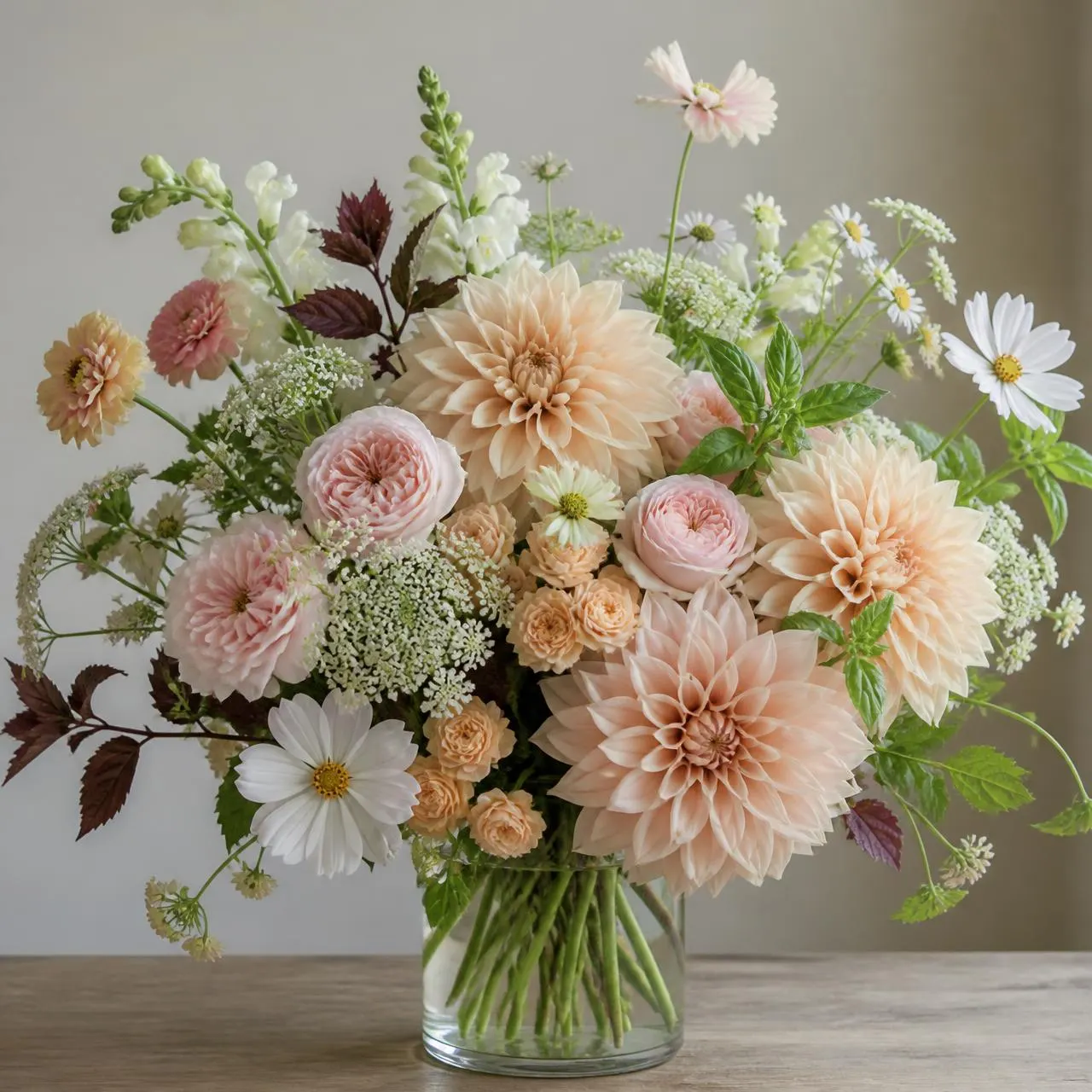
Because the flower combines cream, blush, beige and muted pink, it pairs beautifully with flowers that repeat those tones without competing with its enormous scale.
The BotaNotes Café au Lait bouquet
For our featured arrangement, I would create a loose, romantic garden-style bouquet using three fully developed Café au Lait blooms at slightly different stages and shades as the focal flowers.
Secondary flowers. Blush garden roses, whose cupped form contrasts with the broad dahlia while repeating the blush coloring. Champagne or apricot spray roses create a transition between the enormous Café au Lait blooms and smaller filler flowers. White or pale blush cosmos introduce movement and prevent the arrangement from becoming visually heavy.
Supporting flowers. Cream snapdragons provide vertical structure, and blush or antique-pink zinnias repeat the rounded flower shape without competing with the dinnerplate dahlias.
Airy filler. White feverfew creates visual separation between the enormous focal blooms, while ammi (false Queen Anne's lace) adds delicate umbels and an airy garden-picked texture.
Foliage. Fresh green basil provides a soft garden texture and makes an excellent cut-flower foliage. Use a small amount of burgundy ninebark to echo the deeper pink shadows sometimes found in Café au Lait petals.
Bouquet recipe
For a medium-to-large arrangement:
- 3 Café au Lait dahlias
- 3 blush garden roses
- 3 stems champagne spray roses
- 3–5 pale blush or white cosmos
- 3 cream snapdragons
- 3 antique blush zinnias
- 3 stems white feverfew
- 2–3 stems ammi
- 3 stems basil foliage
- 2 stems burgundy ninebark foliage
The goal should not be a perfectly symmetrical florist bouquet. It should look as though an exceptionally talented gardener walked through a cutting garden on a late-summer morning and gathered the best flowers available.
Café au Lait color variations
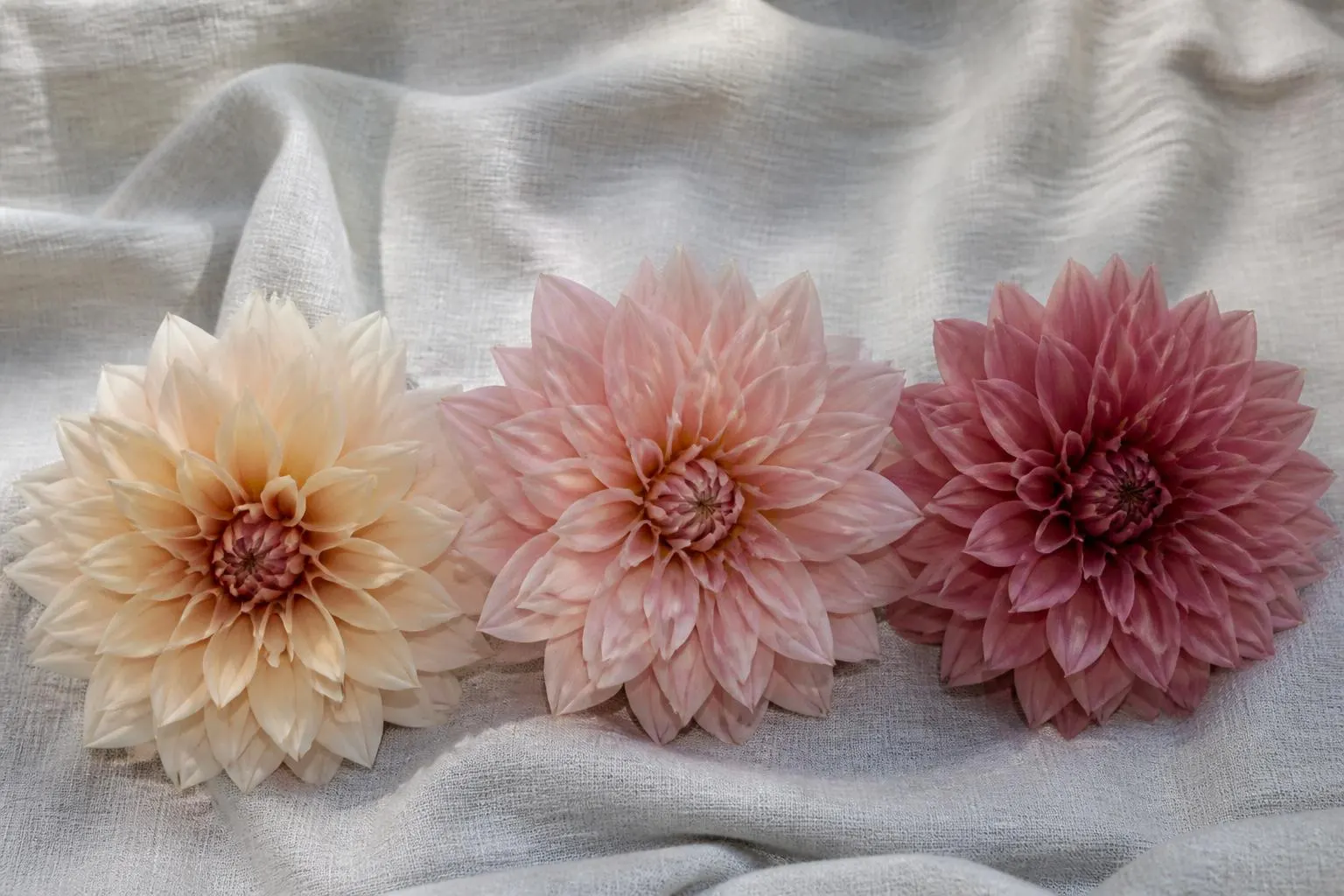
One of the most interesting characteristics of Café au Lait is how dramatically its color can change. A single plant may produce flowers ranging from cream to beige to champagne to blush to dusty pink to pale rose.
Temperature and seasonal conditions can influence expression. This variability is well documented commercially, with Longfield Gardens specifically describing Café au Lait as color-changing according to weather conditions and time of year.
Why doesn't my Café au Lait look like the picture?
First, it may simply be normal color variation. Second, growing conditions may be influencing the flower. Third, the plant may have been mislabeled — dahlia mix-ups do occur during propagation, dividing, packing and shipping.
Rather than identifying Café au Lait solely by color, examine the combination of bloom size, petal structure, plant habit, flower form and changing coloration. A bright solid-pink or completely different flower form should raise more suspicion than a Café au Lait that simply appears pinker than expected.
Does Café au Lait produce good tubers?
Café au Lait has an interesting characteristic worth knowing before dividing or purchasing tubers. Longfield Gardens specifically notes that the cultivar tends to produce smaller-than-average tubers, while emphasizing that tuber size does not determine the resulting plant's performance.
That is useful information because new growers often assume a large tuber is automatically better. It isn't. A healthy smaller tuber with a viable eye can produce an enormous plant — see our guide to identifying an eye on a dahlia tuber.
The American Dahlia Society notes that commercial cut-flower growers also consider tuber production and storage ability important traits and suggests that a successful tuber-producing plant may yield approximately four to six tubers with eyes. That figure describes a desirable general production trait rather than a documented Café au Lait-specific yield.
Café au Lait vs. Café au Lait Rose vs. Café au Lait Royal
These names should not be treated interchangeably.
- Café au Lait — the classic cream, beige and blush cultivar discussed in this article.
- Café au Lait Rose — a related named cultivar generally displaying stronger pink/rose coloring.
- Café au Lait Royal — a much more strongly colored selection with hot pink, rose and lilac tones.
Longfield Gardens describes Café au Lait Royal as retaining the enormous fluffy flowers of Café au Lait while adding much stronger hot-pink, rose and lilac coloration. These deserve individual Dahlia Diary profiles rather than being grouped together as simple color variations.
Is Café au Lait good for pollinators?
Not particularly. Café au Lait's dense double flower is beautiful precisely because hundreds of petals cover the center. Unfortunately, that structure makes pollen and nectar much less accessible to bees and other pollinating insects than in open-centered dahlias.
Gardeners who want both dramatic cutting flowers and pollinator habitat can combine Café au Lait with open-centered dahlia forms and other nectar-rich flowers. That creates a garden serving both purposes.
Is Café au Lait worth growing?
For most dahlia enthusiasts, yes — provided expectations are realistic.
Café au Lait is especially worth growing if you want:
- enormous statement flowers
- wedding-quality blooms
- sophisticated neutral coloring
- flowers for photography
- dramatic floral arrangements
- a classic collector's dahlia
- a cultivar with significant variation from bloom to bloom
It may be less suitable if your highest priority is:
- extremely long vase life
- small bouquets
- compact plants
- pollinator habitat
- rigidly uniform flower color
- flowers that need no staking
Café au Lait became famous for a reason. It combines the scale of a dinnerplate dahlia with colors rarely associated with giant flowers: cream, blush, champagne and antique pink rather than screaming red, orange or yellow. The result is a flower that can be enormous without appearing visually heavy. And that contradiction may be exactly what makes Café au Lait so memorable.
Frequently asked questions about Café au Lait dahlia
How big does a Café au Lait dahlia get?
Plants generally reach approximately 36–48 inches tall and 18–24 inches wide. Individual plants may vary according to growing conditions.
How big are Café au Lait flowers?
Typical flowers are approximately 8–10 inches across, putting Café au Lait firmly in the dinnerplate category.
What color is Café au Lait?
The classic cultivar ranges from cream and beige through champagne, blush pink and pale rose. Color can change according to growing conditions and time of year.
Why is my Café au Lait dahlia pink?
Pink does not automatically indicate that you received the wrong cultivar. Café au Lait naturally produces variable coloration and can develop pronounced blush and rose tones.
Is Café au Lait a good cut flower?
Yes. It is particularly valued as a statement flower for large arrangements, weddings and event design. Its greatest strength is visual impact rather than record-breaking vase longevity.
How long does Café au Lait last in a vase?
There is insufficient authoritative cultivar-specific testing to guarantee an exact vase life. The American Dahlia Society considers approximately five days in the customer's vase an ideal general target for cut dahlias.
Does Café au Lait need staking?
Yes. Supporting the plant is strongly recommended because its large, heavy flowers can bend stems, particularly after rain or in windy weather.
Can Café au Lait grow in a container?
It can, but this is a substantial plant with enormous flowers. Use a large container with excellent drainage and provide sturdy support, regular watering and adequate nutrition.
Is Café au Lait perennial?
Dahlias are tender perennials. Whether tubers can safely remain in the ground over winter depends on winter temperatures, soil drainage and local conditions. In climates where the ground freezes deeply, growers typically lift and store tubers for winter — see our tuber storage guide.
Sources and further reading
The horticultural facts in this guide were cross-checked against authoritative dahlia organizations, established trial growers and experienced cut-flower producers: the Royal Horticultural Society's International Dahlia Register; the American Dahlia Society's Fundamentals of Growing Dahlias and Dahlias as Cut Flowers; Floret Flowers' dahlia variety trials and breeding notes; and Longfield Gardens' current trial-based listing for Café au Lait.
Track your own Café au Lait records
Growing Café au Lait this season? Add it to your Dahlia Diary in BotaNotes to record planting dates, bloom size, color shifts, stem length, vase life and tuber production. Over time, your own garden records become the most useful growing guide for your climate.