Dahlia Diary
Do Deer Eat Dahlias? Honest Answer + 7 Ways to Protect Them
Dahlias usually land on "deer resistant" plant lists — but anyone who has found a row of dahlia tops bitten off overnight knows that label is optimistic. Here's the honest picture and what actually works.
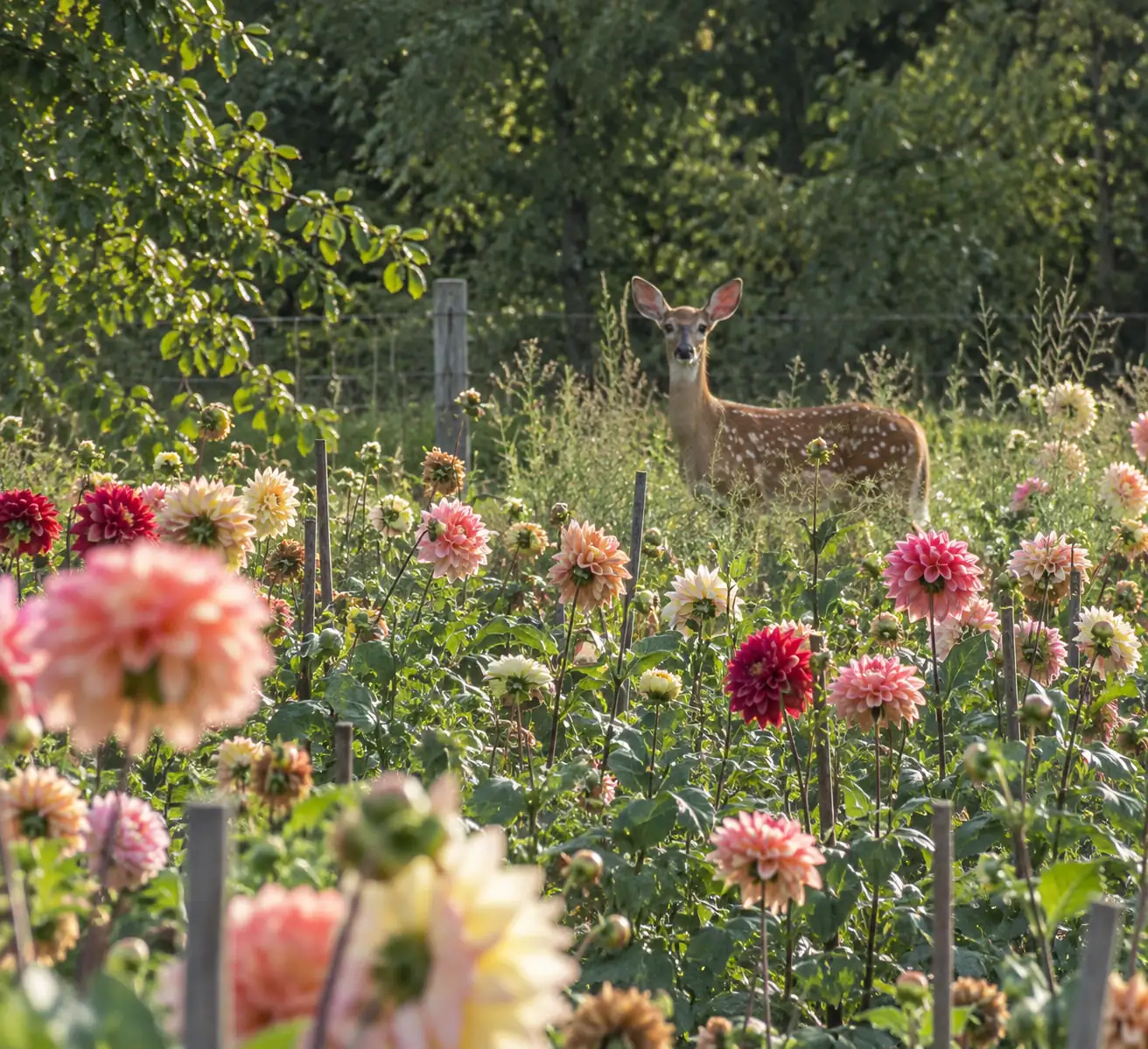
The short answer
Deer can eat dahlias, and sometimes they do — but dahlias are not a favorite. On the usual deer menu, dahlias rank well below hostas, daylilies, tulips, arborvitae and roses. Gardeners in low-pressure areas often grow dahlias for years without a single bite, while gardeners one neighborhood away lose every bud. Deer pressure is local, and individual deer develop individual tastes.
When dahlias are most at risk
- Spring and early summer. New shoots are tender, nutrient-dense, and exactly the texture deer seek out. This is when most browsing happens — right when you're deciding when to plant your tubers, plan protection at the same time.
- Late summer drought. When wild forage dries up, irrigated garden beds become the greenest buffet in the neighborhood.
- Bud stage. Deer love unopened flower buds. A plant that survives all summer can be stripped the week before it blooms.
- New plantings. Deer sample anything new in their territory. Freshly planted beds get investigated first.
Deer or rabbit? How to tell
Before you blame deer, check the evidence. Deer have no upper front teeth — they tear plants, leaving a ragged, shredded edge on stems, typically from knee-height up. Rabbits leave a clean, angled 45-degree cut close to the ground. Voles and gophers take plants from below. Each pest needs a different defense, so a 30-second inspection saves a wasted fix.
7 ways to protect dahlias from deer
1. Fence the bed (the only guarantee)
An 8-foot fence stops deer completely. For a small dahlia bed, a simpler option works too: two parallel 4-foot fences about 3 feet apart. Deer can jump high or wide, but not both at once.
2. Cage young plants
A cylinder of welded wire or hardware cloth around each plant protects the vulnerable first months. Once plants are staked for summer, the stakes themselves help hold netting.
3. Rotate scent repellents
Commercial egg- or putrescent-based sprays work well, but deer habituate. Switch products or scents every few weeks, and always reapply after rain. Spray the foliage, not the blooms you'll cut.
4. Plant a decoy perimeter
Ring the dahlia bed with plants deer strongly avoid — lavender, Russian sage, salvia, catmint, alliums, marigolds. It's not a force field, but a bed that smells of lavender from the outside gets sampled less often. (See our companion planting chart for more pairings.)
5. Use motion and surprise
Motion-activated sprinklers are genuinely effective in home gardens — the sudden noise and spray startle deer without harming them. Move the unit occasionally so they don't map its range.
6. Fish line trick
Two or three strands of 20-lb fishing line strung on stakes at 2, 3 and 4 feet high confuse deer: they feel a barrier they can't see and usually retreat rather than push through. Cheap and nearly invisible.
7. Grow the cut garden close to the house
Deer are edge animals. Beds near doors, patios, lights and dogs get visited far less than the back corner of the property. If you have one high-traffic spot near the house, that's where your best dahlias belong.
If the worst happens
A browsed dahlia is a setback, not a loss. The plant almost always regrows from below the bite and branches more densely than before — the same response you get from deliberate pinching. Water it, give it a light feed, and expect blooms a few weeks late. And since dahlia tubers are perennials that come back every year (with winter digging in cold zones), even a badly browsed season only costs you flowers, not the plant.
Track every variety — and what survived the season
Dahlia Diary keeps your whole collection in one place: varieties, tuber inventory, bed maps for your exact growing zone, and a journal to record what the deer got and what thrived — so next spring's plan is already written.
Start your dahlia diary →The bottom line
Dahlias are deer-resistant-ish: low on the menu, not off it. In light deer country, a repellent rotation is enough. In heavy pressure, cage the young plants or fence the bed. Either way, if a deer does get to them, the tubers below ground mean you'll almost always get a second chance this season — and every season after.