Garden Planning
4x8 & 4x4 Raised Bed Layouts: 5 Plans With Spacing
A great raised bed layout starts before you buy a single transplant. The five plans below cover the most common bed sizes — 4×4, 4×8, and L-shaped — with crop lists, spacing, and the small placement decisions (sun, trellis, water access) that make the difference between a productive bed and a frustrating one.
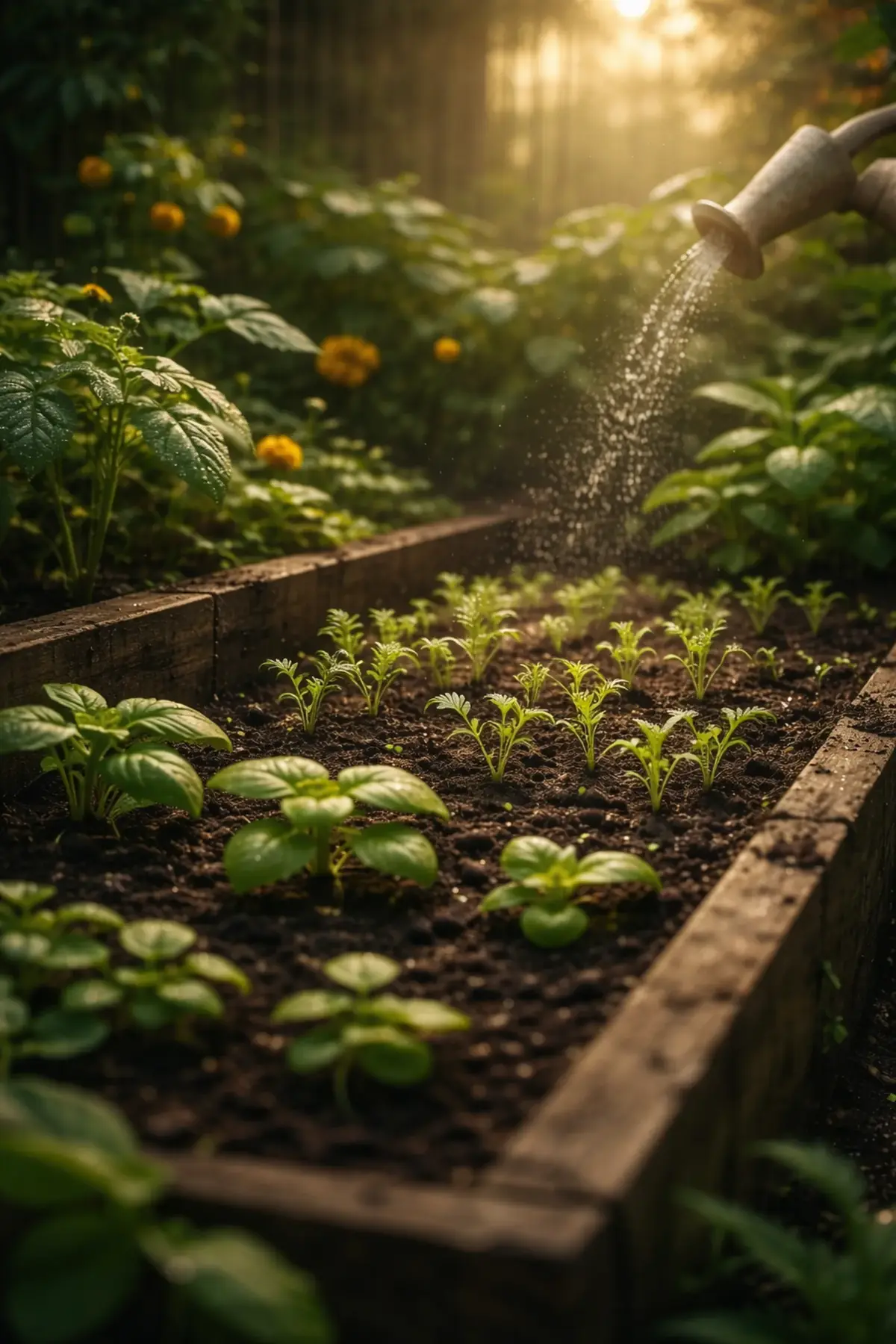
Five rules every raised bed layout follows
- Tall crops on the north side. Trellised cucumbers, pole beans, and indeterminate tomatoes belong on the north edge so they don't shade shorter plants. (Flip this in the southern hemisphere.)
- Group by water need. Lettuce wants consistent moisture; tomatoes want deep, infrequent soaks. Cluster similar drinkers so a single watering routine works for the whole zone.
- Group by lifespan. Quick spring crops (radish, lettuce, spinach) go together so you can clear and replant that section without disturbing tomatoes that will be there until October.
- Leave a 1×1 herb corner. Basil with tomatoes, dill with cucumbers — herbs slot into corners and edges without competing for footprint.
- Mind the 2-foot reach. A 4-foot-wide bed lets you reach the middle from either side without stepping on soil. Wider than that and you'll compact the planting area harvesting.
Plan 1 — The classic salsa bed (4×4)
16 square feet, everything you need for a summer of fresh salsa.
- Back row (north): 2 indeterminate tomatoes, caged, 24″ apart
- Middle row: 2 jalapeño peppers, 1 sweet pepper
- Front row (south): 1 cilantro square, 1 basil square, 4 garlic, 4 onions
- Corners: marigolds (pest deterrent + pollinator forage)
Plant cilantro every 3 weeks — it bolts fast in heat, and a steady supply matters more than a one-time harvest.
Plan 2 — The family vegetable bed (4×8)
32 square feet, designed to feed two adults a salad a day from June through October.
- North edge (trellis): 4 cucumber plants on a 4×6-foot trellis
- Row 2: 3 tomatoes (1 cherry, 2 slicers), basil interplanted
- Row 3: 4 peppers + 1 zucchini at the end (it'll sprawl out)
- South edge: alternating bands of lettuce, spinach, carrots, radishes, and beets — pulled and re-sown every 3–4 weeks
Plan 3 — The salad-and-greens bed (4×4, partial shade)
For a spot with 4–5 hours of sun. Skip the tomatoes; double down on greens.
- 4 squares leaf lettuce, sown 2 weeks apart
- 2 squares spinach, 1 square arugula
- 2 squares Swiss chard (cut-and-come-again all season)
- 1 square kale, 1 square parsley
- Edge: chives, a clump of scallions, and nasturtiums for color and pest control
Plan 4 — The L-shaped bed (around a patio corner)
An L-shape gives you reach from outside and inside the corner — useful for hugging a patio or walkway. Treat each arm as its own zone:
- Long arm (4×8): trellised pole beans on the outside edge, peppers and bush beans in the middle, herbs along the patio-facing edge for easy snipping while cooking
- Short arm (4×4): tomato + basil block, with a marigold border
Run drip irrigation along the inside edge of both arms — it's the only spot you can plumb without tripping over a hose.
Plan 5 — The pollinator-and-vegetable bed (4×8)
For gardeners who care about bees and butterflies as much as harvest weight.
- North edge: a trellis of pole beans and one cucumber
- Middle: 2 tomatoes, 2 peppers
- South strip: a continuous band of cosmos, zinnias, and borage with carrots and radishes tucked between
- Corners: dill, fennel (in a pot — fennel inhibits neighbors in soil), and parsley to host swallowtail caterpillars
Soil depth, drainage, and edging
- Depth: 10–12 inches for most vegetables; 18+ inches if you want full-size carrots, parsnips, or potatoes in the bed.
- Soil mix: roughly 50% topsoil, 30% compost, 20% aeration material (perlite, coarse sand, or vermiculite). Top up with an inch of compost every spring.
- Drainage: avoid sealing the bottom. Lay landscape fabric or cardboard to suppress weeds but allow drainage; never plastic sheeting.
- Edging: cedar lasts 8–10 years, untreated pine 3–5, galvanized steel 15+. Stone and concrete are permanent but heat up the soil edges in summer.
Spacing cheat-sheet
- Tomato (indeterminate, caged): 24″
- Pepper, eggplant, broccoli, cabbage: 18″
- Bush beans, lettuce (head), kale: 12″
- Carrot, beet, spinach: 3–4″
- Cucumber on trellis: 12″
- Zucchini: 24″ (give it an end of the bed)
Map it before you dig
Sketching the bed on graph paper takes ten minutes and saves a season of regret. A planner that holds onto last year's plan is even better — rotating crops away from where their family grew last year is the single biggest disease-prevention move you can make. Lay out your raised beds in BotaNotes and the rotation history travels with you year to year.
Want a smaller-grid approach? See the full square foot gardening chart for exact plant counts per square.