Garden Planning
Square Foot Gardening Chart: Plants Per Square (Full Guide)
Square foot gardening turns a 4×4-foot bed into sixteen tidy one-foot squares, each holding a different crop at the right density. Here's the full plants-per-square chart, the spacing math behind it, and a starter layout you can plant this weekend.
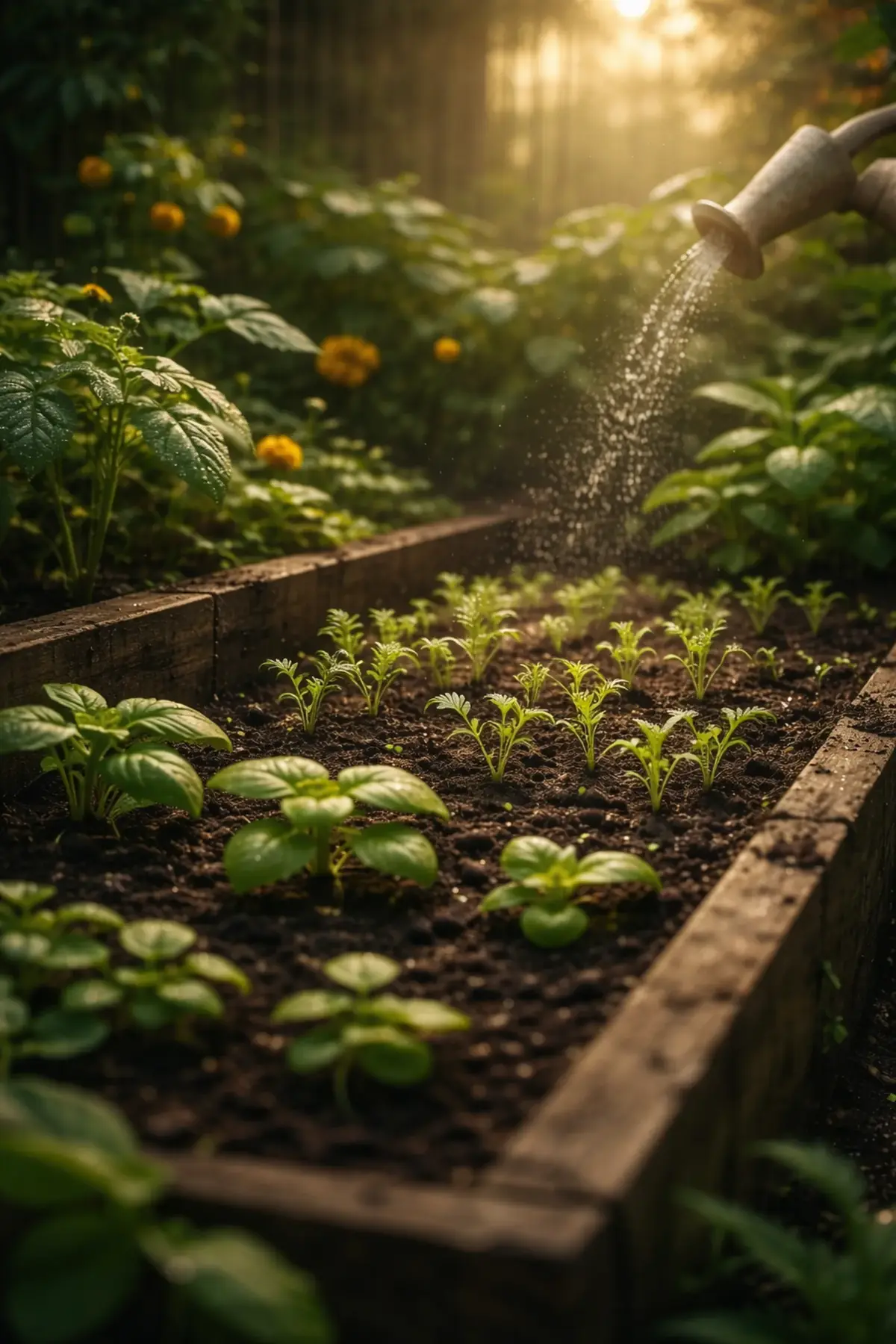
How the square foot method works
Mel Bartholomew's square foot gardening system, popularized in the 1980s, replaces long rows with a grid of one-foot squares. Each square holds 1, 4, 9, or 16 plants depending on the crop's mature spacing. The grid is the whole trick — once it's in place, you spend less time thinning, weeding, and second-guessing.
The math is simple: divide 12 inches by the plant's recommended spacing, square the result, and round down. A carrot needs 3 inches → 12 / 3 = 4 → 4×4 = 16 per square. A pepper needs 12 inches → one per square. That's the entire chart.
Square foot gardening chart
1 plant per square (12-inch spacing)
- Tomato (caged or staked, indeterminate may need 2 squares)
- Pepper
- Eggplant
- Broccoli
- Cauliflower
- Cabbage
- Brussels sprouts
- Kale (full size)
- Swiss chard
- Okra
- Corn (4 per square if pollinating in a block of squares)
4 plants per square (6-inch spacing)
- Leaf lettuce
- Garlic
- Bush beans
- Swiss chard (baby leaf)
- Parsley
- Cilantro
- Dill
- Strawberries
9 plants per square (4-inch spacing)
- Spinach
- Beets
- Bush peas
- Arugula
- Turnips
- Onion sets (small)
16 plants per square (3-inch spacing)
- Carrots
- Radishes
- Scallions / bunching onions
- Chives
Vining and sprawling crops (2 squares or trellis)
- Cucumber — 2 per square on a vertical trellis on the north side
- Pole beans — 8 per square on a trellis
- Peas (vining) — 8 per square on a trellis
- Zucchini and summer squash — one plant per 2 squares
- Winter squash, melons, pumpkins — one plant per 4 squares, trellised
A starter 4×4 layout (16 squares)
A balanced first bed for a sunny spot — five crop families, staggered harvests, and a trellis on the north edge to keep tall plants from shading shorter ones:
- Row 1 (north, trellised): 2 cucumbers, 8 pole beans, 8 pole beans, 2 cucumbers
- Row 2: 1 pepper, 1 pepper, 1 broccoli, 1 broccoli
- Row 3: 1 tomato (caged), 1 tomato (caged), 4 lettuce, 4 lettuce
- Row 4 (south, shortest): 16 carrots, 16 radishes, 9 beets, 9 spinach
That single 4×4 bed produces an estimated 30–50 pounds of food over a season — more than most 100-square-foot row gardens, with a fraction of the weeding.
Soil, water, and sunlight rules
- 6+ hours of direct sun for fruiting crops (tomato, pepper, squash). Leafy greens tolerate 4 hours.
- 6 inches of soil minimum for shallow crops; 12 inches for carrots and tomatoes. Use a 1/3 compost, 1/3 peat or coir, 1/3 vermiculite blend (the classic “Mel's Mix”) or any rich raised-bed soil.
- Water by the square, not by the bed. Hand-water at the base of each plant rather than overhead — this is what keeps the dense planting disease-free.
- Top-dress with compost between successions. As soon as you pull a crop, scratch in a trowel of compost and replant the same square.
Succession planting: getting 2–3 harvests per square
The real productivity gain comes from re-planting squares the day you harvest them. Pull spring radishes in May, drop in bush beans. Cut lettuce in June, sow more lettuce in September. A planning app or paper grid is essential — by July you'll lose track without one. Map your squares in BotaNotes to track what's in each square, when it goes in, and what follows it.
Common square foot gardening mistakes
- Skipping the grid. The physical grid (string, lath, or paint) is what keeps you honest about spacing. Without it, the system collapses into rows.
- Crowding tomatoes. Indeterminate tomatoes really do need 2 squares each. One square works for determinates and dwarfs only.
- Planting tall crops on the south side. They shade everything north of them. Trellises and tall plants always go on the north edge in the northern hemisphere.
- Forgetting succession. An empty square in July is a missed harvest in September. Re-plant immediately.
Plan it once, harvest all season
Sketch your bed, fill each square, and you have a planting plan, a shopping list, and a watering map in one drawing. More garden planning guides or jump straight into building your bed in the planner.