Flower Farming
How to Start a Flower Farm (Backyard to Business)
Everything they don't tell you when you Google "how to start a flower farm" — the real numbers on land, startup cost, income, and the first three sales channels that actually work.
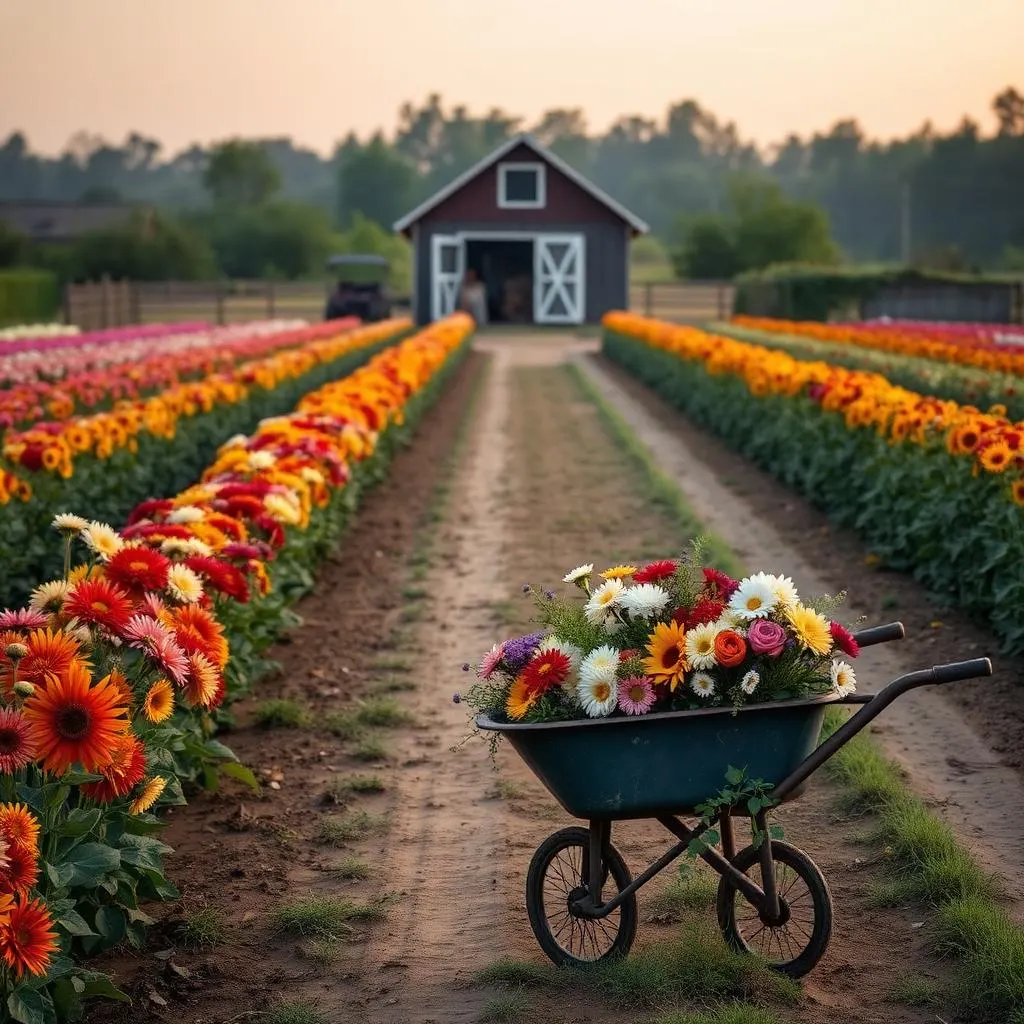
How much land do you need for a flower farm?
Less than you think. A serious backyard flower farm runs on 1/8 to 1/4 acre (about 5,000–10,000 sq ft) of production beds. That's the size of a large suburban lot's back garden. Common thresholds:
- 1/16 acre (~2,700 sq ft): weekly bouquet subscription for 10–15 households.
- 1/8 acre: a small farmers-market stand plus a handful of weddings.
- 1/4 acre: full-time single-operator income possible in a strong market.
- 1/2 acre+: you need help. Labor becomes the constraint, not land.
More land isn't the goal. Density is. A well-run 1/8 acre with succession planting and tight spacing outproduces a sloppy half-acre every time.
How much do flower farms actually make?
Realistic first-year revenue on 1/8 acre, in the US, growing common annuals with direct-to-customer sales:
- Bouquet subscription (10 members × 16 weeks × $28): ~$4,500
- Farmers market (16 weeks × $350 avg): ~$5,600
- 2 weddings (florist collaborations): ~$2,500
- Total year 1 gross: ~$12,000–15,000
Established growers on 1/4 acre routinely gross $40,000–$80,000. The top end of the industry — wedding-focused, five-year-plus operators — pushes into $100k+ per quarter-acre. Net margins vary wildly with your own labor cost.
Are flower farms profitable?
Yes, but with an asterisk. Gross revenue per square foot beats almost any vegetable crop — flowers are perishable, seasonal, and priced on beauty, not calories. The catch: labor is enormous. If you value your own time at $25/hr, most first-year farms are break-even to modestly profitable. By year 3 with efficient systems and repeat customers, 20–40% net margins on a 1/4 acre are typical.
Startup cost: what a realistic first year looks like
- Seeds and plugs: $300–800
- Dahlia and ranunculus corms: $200–600 (optional year 1)
- Landscape fabric, drip irrigation, netting: $500–1,000
- Harvest buckets, coolers, pruners: $300–500
- Farmers market fees + insurance: $400–800
- Total realistic year 1: $1,700–3,700
You do not need a walk-in cooler, a tractor, or a high tunnel in year one. Buy them with year-one revenue if you liked year one.
What to grow: the profit-per-square-foot list
Not all flowers are equal. Start with these and expand from there:
- Dahlias — the queen. $2–4 per stem, 6–10 stems per plant.
- Lisianthus — hard to grow, priced accordingly ($3–5/stem).
- Ranunculus + anemone — cool-season crown. Fills the March–May cash gap.
- Zinnia — easiest, most reliable summer money.
- Snapdragon — spring cash, again in fall.
- Sunflower (branching) — market gold with tight successions.
- Celosia — heat-tolerant, unique textures wedding designers love.
- Foliage (basil, ninebark, eucalyptus) — sells with every bouquet.
How to become a flower farmer: the honest path
- Year 0 (this year): grow a serious cut-flower garden as practice — the beginner's cut flower garden guide is the entry point.
- Year 1: add a bouquet subscription for friends and coworkers. This teaches you real harvest volumes and pricing pressure without the pressure of a market booth.
- Year 2: commit to one sales channel — market OR CSA OR weddings. Don't split focus.
- Year 3: layer a second channel and start tracking crop-by-crop profitability. Cut what doesn't pay.
The three sales channels that actually work
- Bouquet CSA / subscription. Cash upfront, predictable harvest targets, loyal customers. Highest margin. Ceiling: your delivery radius.
- Farmers market. Best training ground for pricing, presentation, and customer reads. Cash is spikier. Ceiling: your booth size.
- Wedding and florist wholesale. Highest per-stem prices, longest feedback loop, requires more sophistication (color palettes, delivery timing, form diversity). Ceiling: your reputation.
Farmstand and retail wholesale exist but usually as year 3+ additions, not starting moves.
The templates you need next
Two things separate hobby growers from farmers: a succession calendar and a post-harvest protocol. Both are here: